COSTUME DRAWINGS
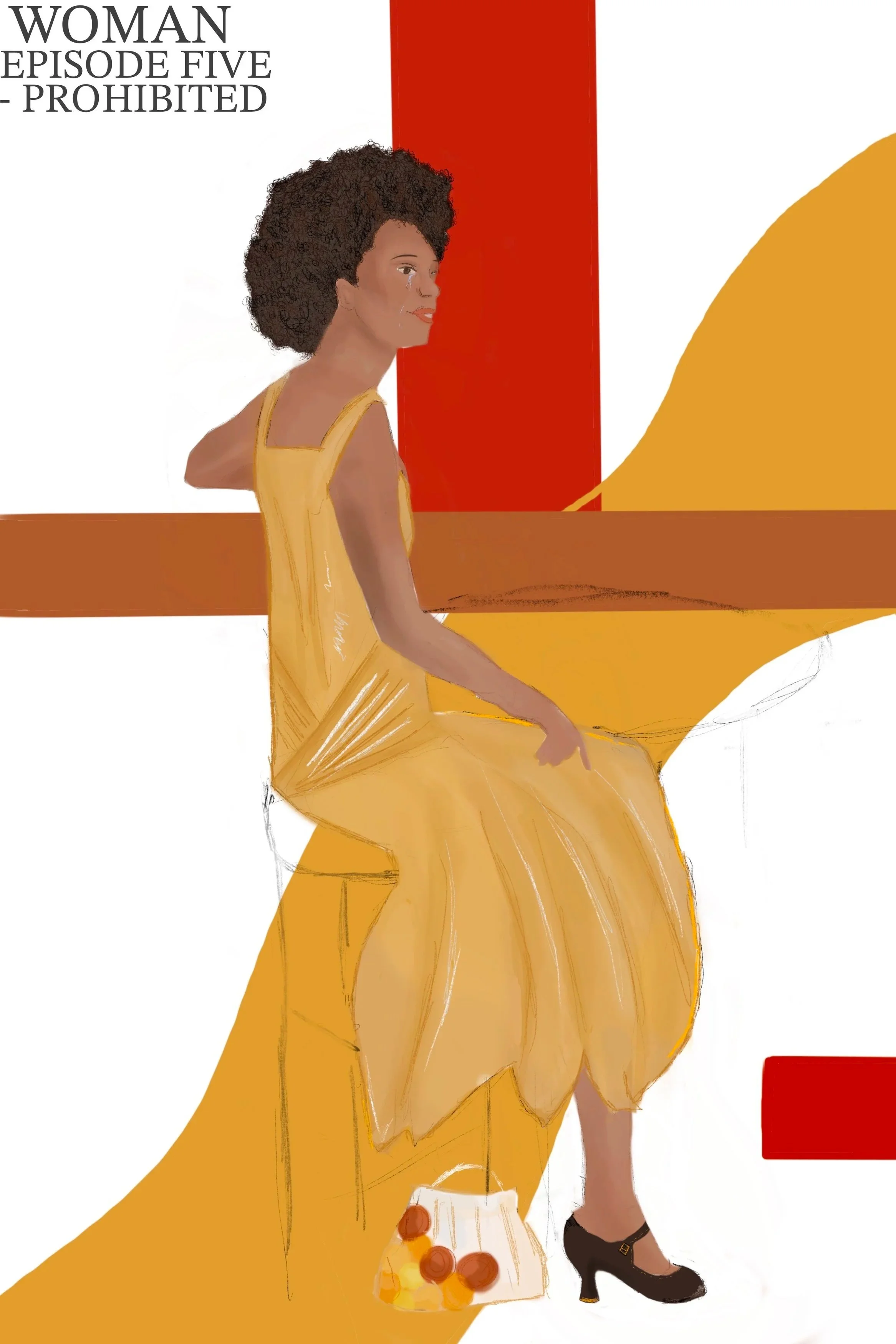
MACHINAL
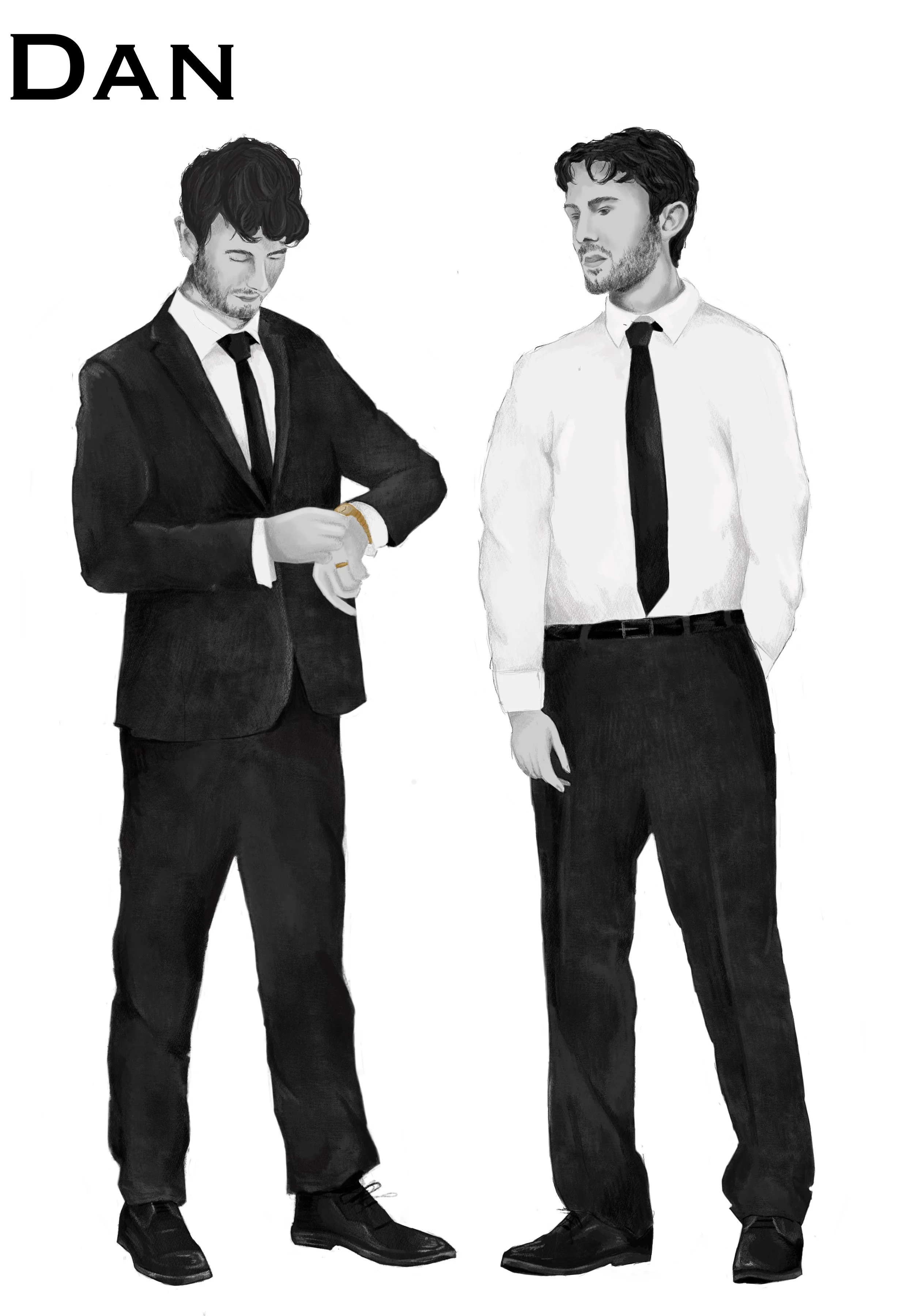
That Last Summer is a new piece of writing by Azuka Oforka following a childhood friendship group reunited after several years for a member of the group Aaliyah’s funeral. It is a modern play set in a play park where they all used to hang out, which a member of the group, Maya, has summoned them down to during the wake. The play explores themes of responsibility and our actions consequences. I worked closely with the actors and director Lee Lyford during the rehearsal process for these designs, exploring character within the costumes and what each character would wear to a wake.
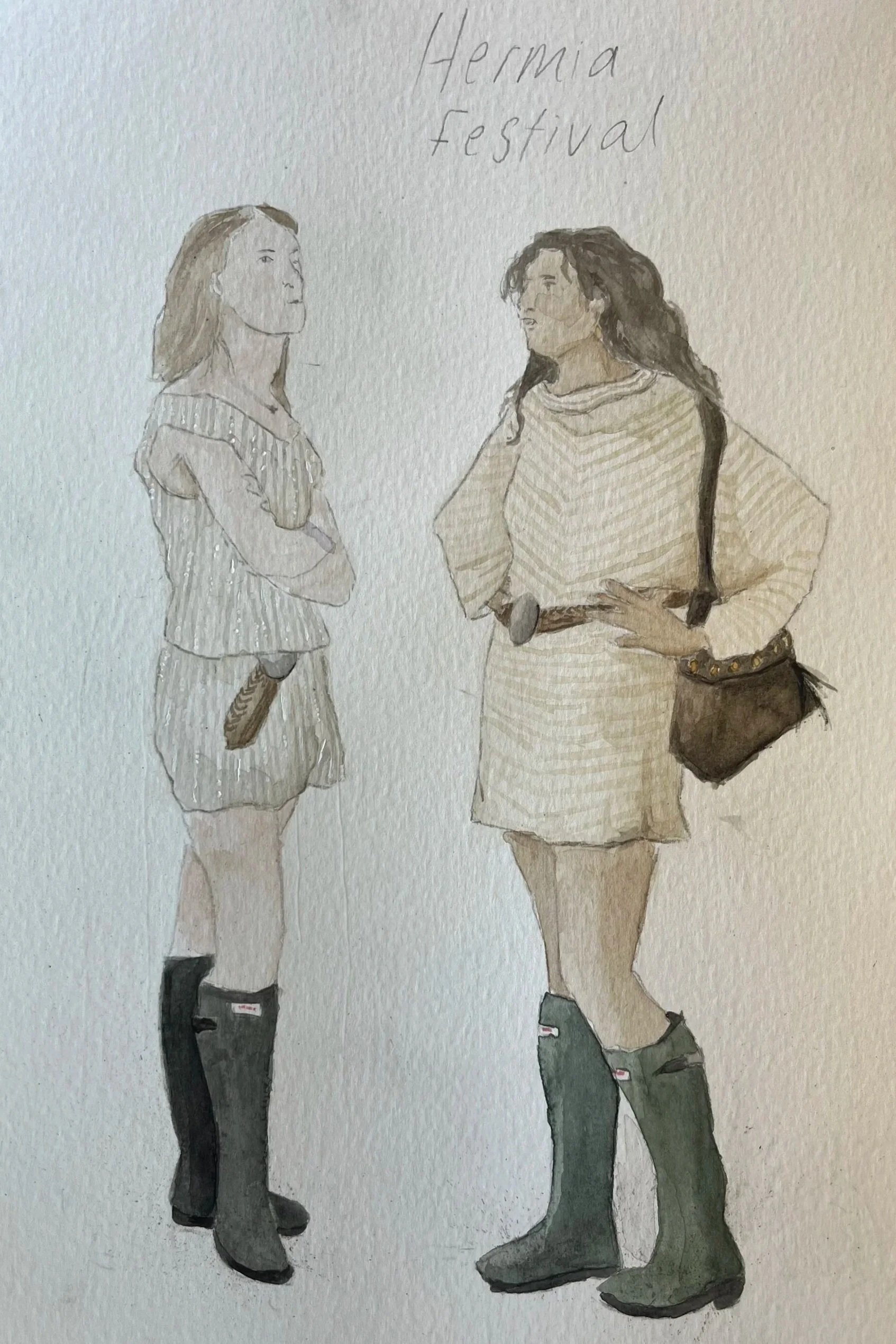
MIDSUMMER NIGHTS’ DREAM
In this shorten rendition of a midsummer night’s dream, the director Simon Reeves chose to set it in modern times and around three different locations, Athens became a highbrow cocktail party, the forest became a music festival and the mechanicals met in a Wetherspoon’s pub.
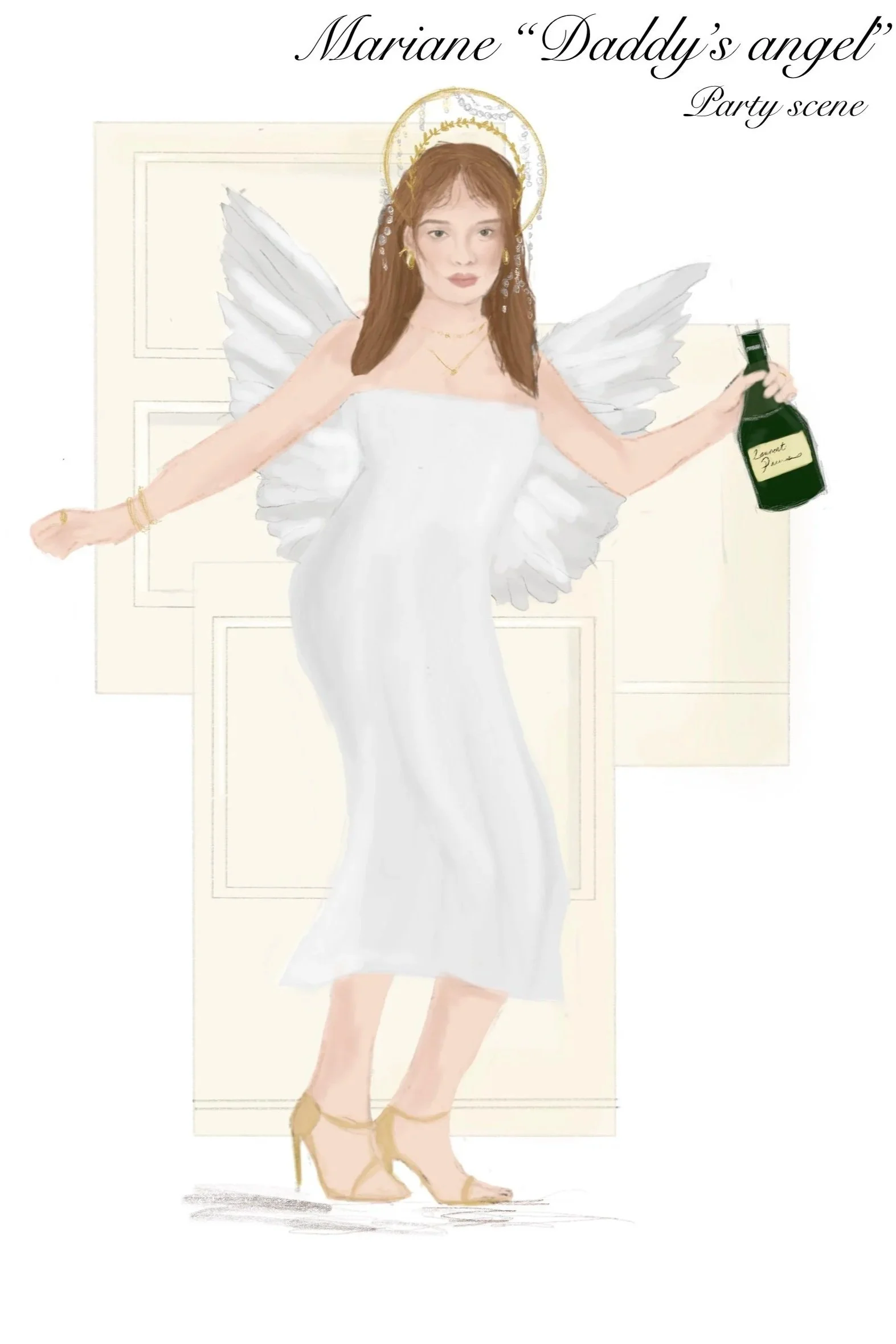
TARTUFFE
Tartuffe was adapted by John Donnelly to create a modern retelling of the original script by Molière. The play explores themes of misplaced trust, false piety, sex and power. It follows an affluent family based in London, where Orgon, the dad, heavy with the weight of moral corruption takes in a cult leader style spiritual guru Tartuffe. It is clear Tartuffe is not who Orgon perceives him to be and the play follows the family as try and uncover Tartuffe’s true nature. In working with the director Claire Brown we decided conceptually that the characters would be designed to be caricatures of their archetypes for example spoiled rich girl and champagne socialist, to play into the comedy of the piece.
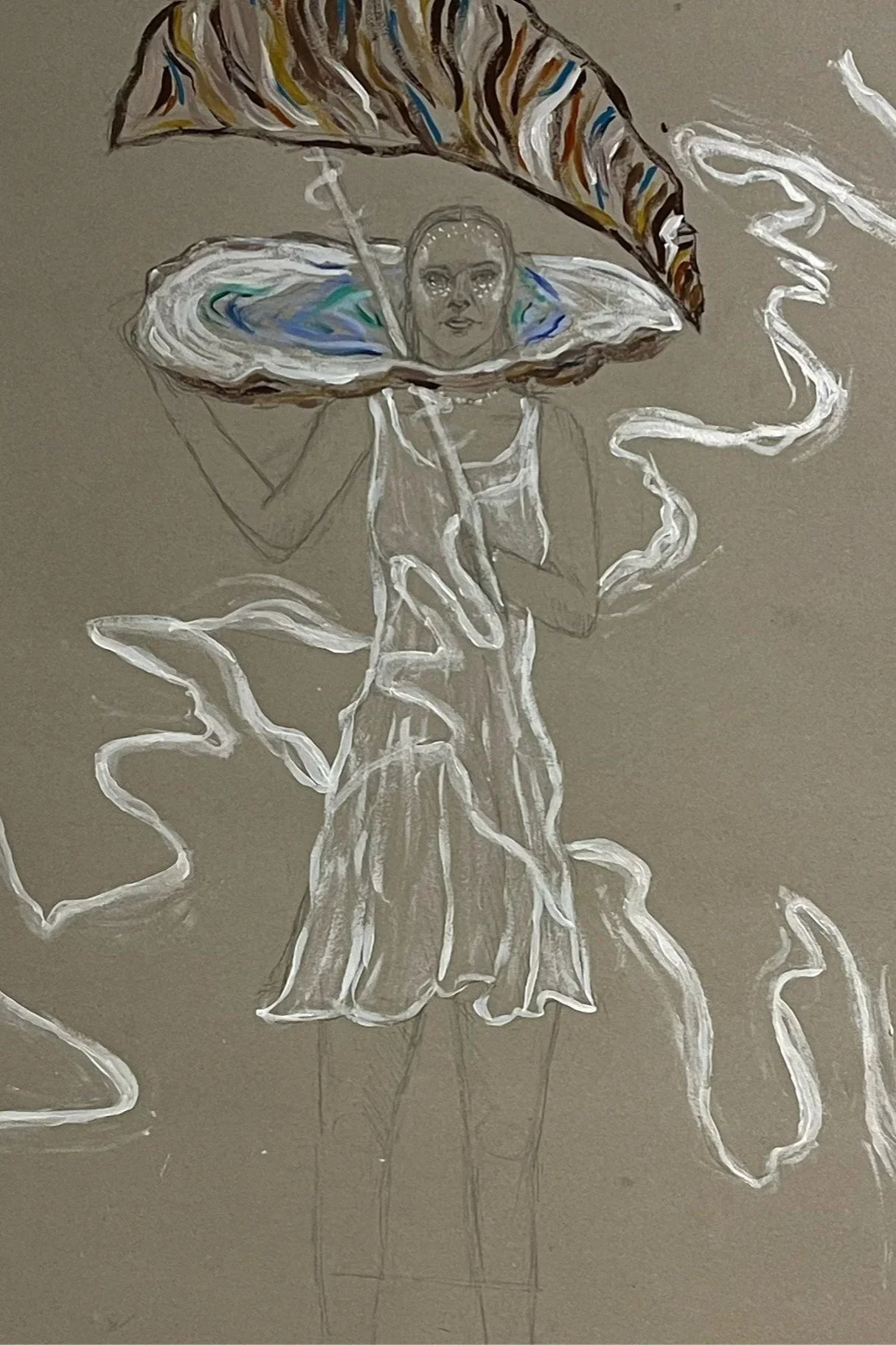
WEARABLE ART
Wearable Art is a sustainable costume project finishing in a performance as part of a runway style show. For this year we were given the brief of “Underwater Love” and I chose to design a costume based off an Oyster focusing the design around a central shell headpiece.
THAT LAST SUMMER
Machinal written in 1928 by Sophie Treadwell is a play inspired by the real life case of Ruth Snyder, a woman who murder her husband with her lover. She was sentenced to face the electric chair, and a photo secretly taken of her in the chair became highly publicised. The play follows themes of the capitalist machine, forced marriage, freedom to love, and a woman’s role. For this conceptual design I set it in New York and Harlem in the 1920s, and was highly influenced by the Harlem Renaissance art movement drawing particular inspiration from artists such as William H Johnson, Jacob Lawrence, and Arran Douglas.